




Follow Us


insights
November 6
Are You Overlooking Your Next Big Hire?


Key Takeaways
- Great candidates may be overlooked because they lack one or two skills that could reasonably be learned.
- There is a difference between essential qualifications and preferred skills that can be developed through training.
- Experience, transferable skills, adaptability, and communication can be just as valuable as familiarity with a specific system or tool.
- Hiring beyond the checklist can help employers recognize talent without compromising their standards.
- A recruiting partner can help employers evaluate the full picture and identify candidates whose strengths align with the role.
Estimated reading time: 7 minutes
Table of contents
Read Article Here:
Imagine interviewing a candidate with years of relevant experience, a proven track record, strong communication skills, and the ability to solve problems. They understand the industry and have successfully handled responsibilities similar to those your team needs.
There is just one catch: They have not used your company’s specific software. Or perhaps they are unfamiliar with a reporting system or a newer technology.
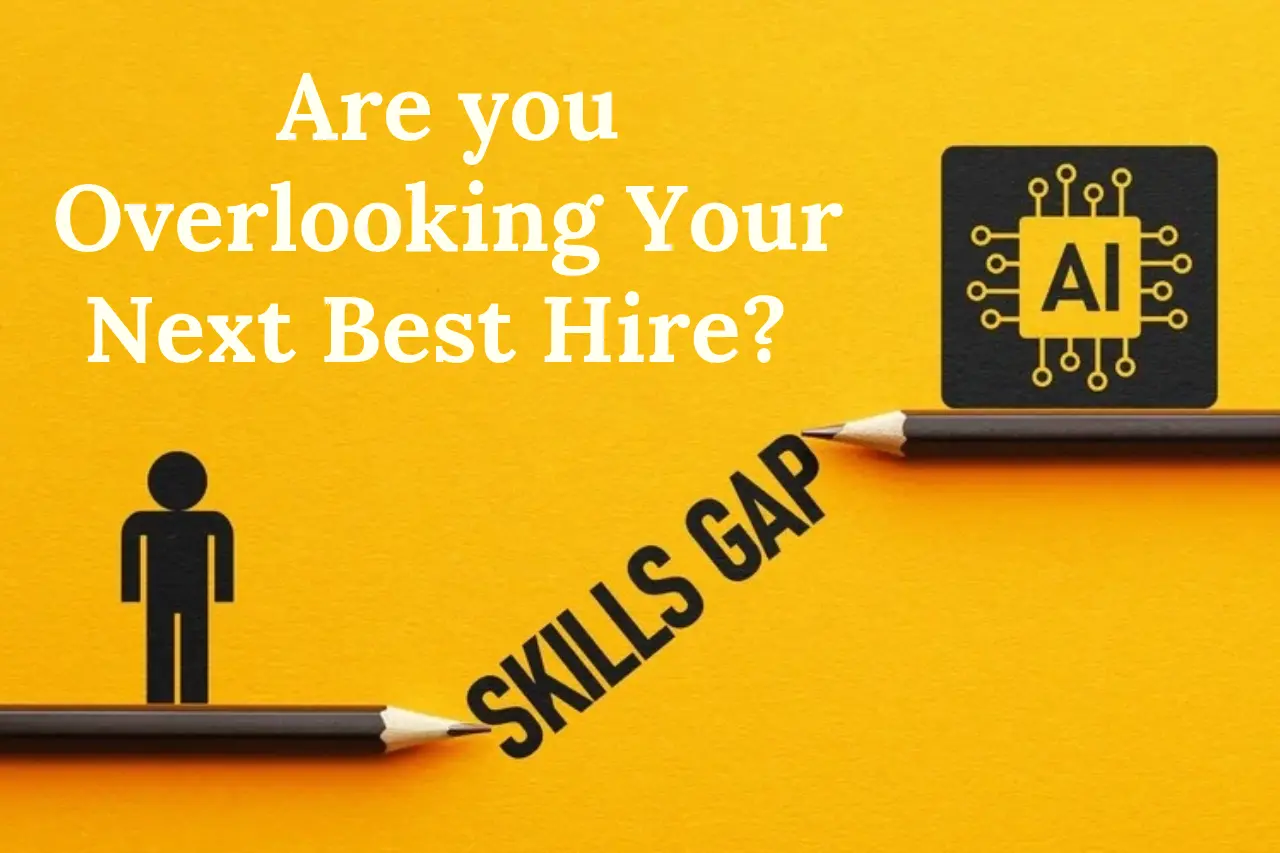
Would you pass on an otherwise great candidate because of one or two skills they could learn?
It happens more often than employers may realize. In the search for someone who checks every box, talented professionals can be overlooked for gaps that may be relatively easy to close.
The question isn’t whether employers should lower their hiring standards. It’s whether every qualification is truly essential to the role.
The right hiring decision comes from understanding the difference between a candidate who cannot perform the work and a capable professional who may simply need to learn a new tool or process.
Not Every Skill Gap Is a Dealbreaker
As technology and business needs evolve, so do the skills employees need. From AI tools and accounting platforms to CRM systems and internal processes, employees are continually learning new ways to work.
Yet some employers expect new hires to arrive already knowing every system and process. Consider an experienced accounting professional who understands financial reporting, reconciliations, and month-end close but has not used your particular accounting software. Does that make them less qualified than someone who knows the software but lacks the same depth of accounting experience?
There’s a difference between lacking the ability to do the job and needing to learn a new tool to do it.
Of course, certain qualifications are nonnegotiable. Required licenses, specialized expertise, leadership experience, and critical technical skills may be essential from day one. But familiarity with a particular software platform, internal process, or company-specific procedure may be something a capable professional can learn.
The challenge is determining which requirements are truly essential and which can reasonably be developed.
Should Employers Prioritize Experience or Adaptability?
Why not both?
Experience matters, but so does a candidate’s ability to learn, communicate, solve problems, and adapt to new situations. A strong candidate may not have every technical skill on day one but may bring the judgment, collaboration, and foundational knowledge needed to grow into the role.
Research reinforces the value of looking beyond technical qualifications. According to the National Association of Colleges and Employers (NACE) 2026 Job Outlook Spring Update, nearly 70% of surveyed employers reported using skills-based hiring. Employers also identified teamwork, critical thinking, and communication among important career-readiness competencies for new graduates.
Meanwhile, Indeed Hiring Lab research published in October 2025 found that the share of U.S. job postings explicitly mentioning training programs increased from 3.4% in January 2018 to 8.1% in August 2025. Training opportunities vary by occupation, but the findings highlight the visibility of skill development in hiring.
These findings do not mean every employer should provide extensive training for every new hire. They do suggest that employers may benefit from considering whether a qualified candidate can develop a missing skill with reasonable support.
The question isn’t just whether someone already knows everything the job requires. It’s whether they have the foundation to learn what’s missing.
When Is a Skill Gap a Genuine Concern?
Looking beyond a candidate’s resume does not mean overlooking important qualifications. Some gaps are manageable; others may create substantial risk. The goal is not to dismiss every missing skill as trainable, but to assess whether the gap affects the candidate’s ability to perform the role.
Before ruling out a candidate—or deciding to move forward—employers should consider four questions:
| Question | A reason to consider moving forward | A reason to pause |
| Is the missing skill essential on day one? | It is preferred but not immediately necessary. | The candidate cannot perform a critical responsibility without it. |
| Can the skill be learned? | The candidate has a relevant foundation and a realistic learning path. | The gap requires extensive expertise or credentials the candidate does not have. |
| Can the organization support training? | Time, resources, and supervision are available. | The role requires immediate independent performance with little room for training. |
| Does the candidate bring other valuable strengths? | Relevant experience and transferable skills address the role’s core needs. | Significant gaps exist across several essential qualifications. |
These considerations can help employers avoid two common mistakes: rejecting qualified candidates over manageable gaps and hiring candidates whose missing qualifications are too significant for the role. The objective is a sound hiring decision—not simply a larger candidate pool.
Finding the Right Fit Means Looking at the Whole Person
At Dawson & Dawson, we believe successful recruiting goes beyond matching resumes to a list of qualifications. It starts with understanding what the role actually requires, what the organization needs, and which candidates have the experience and potential to succeed.
We work closely with employers to understand their true must-haves, identify transferable skills, and evaluate candidates based on their experience, capabilities, adaptability, and alignment with the organization.
Our recruiting process helps employers look at the broader picture, including:
- Relevant experience: Understanding how a candidate’s previous responsibilities and accomplishments translate to the opportunity.
- Transferable skills: Recognizing capabilities that may carry over from another role, company, or industry.
- Essential qualifications: Identifying requirements that are genuinely necessary for the position.
- Potential and adaptability: Considering evidence of a candidate’s ability to learn, grow, and contribute as business needs evolve.
- Long-term fit: Evaluating whether a candidate’s strengths and goals support the organization’s broader needs, not just an immediate vacancy.
Our goal isn’t to encourage employers to compromise on essential qualifications. It’s to help them recognize strong candidates who might otherwise be overlooked.
Whether an employer needs direct-hire placement, temp-to-hire support, temporary staffing, coverage, or project-based talent, the right solution begins with understanding the work and the people who can do it well.
At Dawson & Dawson, we believe successful recruiting is built on Purpose. People. Partnership. We help employers look beyond the checklist to find talent that aligns with their needs and supports long-term success
Don’t Miss the Bigger Picture
The best candidate isn’t always the one who checks every box. Sometimes, it’s the person who brings the right experience, judgment, attitude, and potential but needs to learn one or two things along the way.
Before passing on an otherwise excellent candidate, ask yourself: Are we missing a critical qualification, or simply a skill that can be taught?
That distinction could make all the difference in finding your next great hire.
Looking for talent beyond the checklist? Connect with Dawson & Dawson to discuss how we can help identify qualified candidates who bring the skills, strengths, and potential your organization needs.
Frequently Asked Questions
Depending on the role, specific software platforms, CRM systems, reporting tools, internal procedures, and company-specific processes may be learned with reasonable training. The candidate’s existing knowledge and the complexity of the skill should guide that decision.
Ask candidates for examples of how they have successfully learned unfamiliar systems, adapted to changing responsibilities, or applied existing knowledge to new challenges. Past behavior can provide useful insight into adaptability.
Not at all. It means distinguishing between essential qualifications and skills that can be developed. Employers can maintain high standards while recognizing candidates whose experience, abilities, and potential make them strong long-term hires.
A recruiting partner can help employers look beyond surface-level resume matches by considering relevant experience, transferable skills, essential qualifications, and long-term alignment. Dawson & Dawson works with employers to understand their needs and identify talent aligned with the role and organization.
- Career Coach (8)
- Employee Retention (5)
- General (11)
- In the News (6)
- Job Seeking Tips/Resources (22)
- Office Insights (6)
- President’s Corner (2)
- Recruiting & Staffing (12)
- Tips Trends & Takeaways (9)
- Trends & Takeaways (7)
Recent Post




Categories
